Thursday, April 16, 2015

Our Story

Hush.  Listen.  Beyond the lights of the city and the fresh concrete on the roads lives a people.  Beyond the skyscrapers and the factories lives a story.  Their story is my story and my story is your story, our story is one story that is as old as the waves of the sea and the rocks of the earth.  One story.
The flames cast shadows on Chief Yellow’s face.  His skin hangs loosely from his cheekbones.  He whispers into the night, and his tongue is the tongue of his fathers, and his father’s, and his father’s, and on.  The children chase each other around the fire with feathers and furs falling from their shoulders.  
The shadows dance across the wall.  We choose harmony, we choose peace, we choose the wind in the trees, we choose life.  Listen to the shadow’s whispers.  They haunt me every night.
But nay, it was not to be.  It.  Was not.  To be.
Quit your rambling and listen, fool.  There are children shrieking, but how would you know?  You’ve muffled their voices with so many tunes and advertisements, you probably forgot they existed.  But now I’m making you listen, I’m making you watch.  The boy shrieks, and that one shriek is enough to shatter seven skies.  It was not to be.  Gunshots.  The earth is suddenly thrown off its axis.  The boy feels it.  They all do.
The man yells at Chief Yellow, but Chief Yellow doesn’t understand.  More gunshots.  His skin withers away and becomes earth.  I feel the sadness sifting through my fingers when I’m gardening.  
My story, your story, ours, listen.  Listen to the beat of the drum, quick as dancer’s feet.  Quick feet, chocolate skin, and eyes dark like an oak tree in the night.  Young, old, everyone dancing.  The mango is tangy in their mouth.  
It was not to be, no, it was not to be.  Children and elders lie side by side exhaling the last breaths of life.  I smell death.  You smell perfume.
At Winona Plantation, you will sense the presence of a word.  It can be found in the ink on a page, in the beams of a moon, in the heart and soul of men.  Have they found it yet, have we?
The boy walks with a limp.  He’s supposed to be twelve years old, but he can hardly reach the button of the machine and does not speak.  It’s not enough.  It’s never enough.   The boy stubs his toe, trips and falls into the machine.  I will never forget his bones as I scan the aisles with my eyes.
You do not speak the language of the dead, I know this.  You wipe your feet on the doormat that is stained with the blood of-- “Oh, say can you see?”-- No, Sam, I see, I see.
You are a happy man.  But are you?  They say ignorance is bliss, but they forget.  These are your brothers and sisters, but you forget.  
Beyond the city lights and barbed-wire fence lives a people, a story.  It is your story too, and mine, and ours.
And the story goes on.
And on.
And on.
Listen.

Monday, March 9, 2015

Letter to Eugenia

Dear Eugenia,
My best friend died in my arms yesterday.  I watched the light of life in his eyes flicker and extinguish.  My hands haven’t stopped shaking since.
As I walk over all this rubble and grime and blood, I can’t remember what it all was for.  I was twenty when I left you and joined the war.  Now I’m twenty-three.  Of course I was drafted, but I was excited for war.  But why?  I can’t seem to remember.
Why did they shoot him?  Prisoners of war are often used as leverage, they are usually kept alive.  But this man was killed like a dog as we rescued our soldiers and the receding Confederates took one final shot after executing many we could not rescue.  
He was a negro, you see.  I was suspicious at first, but now I see that he was a living being who deserved his right to life as much as the rest of us.
I have kitchen duty.  I scrub our dishes and clothes to the sound of screaming.  It is hard for the younger ones to keep moving.  That’s why most of us don’t go out to fight.  But I wanted to fight that day.  Why?  Every time I blink my eyes, I see the blood and the clay bursting from his chest.  I can’t sleep at night.
The Confederates won’t seem to give up.  They’re fighting for their country, their livelihood, their economy.  Even though we have the advantage of men, and supplies, they have the great advantage of will.  I wonder which will prove the strongest, in the end.  
It may be treasonous to say something like this, but sometimes I wonder if I’m fighting for the right side, or for the right reasons.  Word came in this morning that General Sherman has completed his March to the Sea.  He has torn a path of destruction from Atlanta to Savannah.  Even the churches were burnt down-- with people inside.  How will they survive?
As a man, I am expected to be brave and tough, and I am trying my hardest to keep that appearance.  I hope you do not think me a weak person, Eugenia, for I am trying so hard to be brave.
My best friend died in my arms yesterday.  He was killed like a dog.
And that’s why I go on.  Because I will never feel completely free until his mother and sisters and son are free as well.  That is why I fight.
I miss you.
Charles

Sunday, February 15, 2015

Bravery

What is bravery?

Dictionary.com defines bravery as the ability to do something that frightens you.

Some say bravery is not letting anything scary scare you.  Some say it means doing whatever you want because you can, and still others say it is doing what you have to do because you can.  Tobias Eaton, for one, touched all our hearts when he said that bravery isn't all that different from selflessness.  Some will even say that bravery is the equivalent of rebellion.

I'm starting to think that all these abstract terms-- happiness, love, freedom, bravery-- are like famous people.  They are intangible, so each individual must define them for themselves.

I think that before we can call ourselves brave, we must know ourselves and what we are striving for. Maybe you want to become a more confident person, or a greater soccer player.  Maybe you want to make the world a better place.  Bravery means to overcome all the obstacles that stand between you and what you're striving for and just do it.

Everyone that marched with MLK couldn't fight back because it was a nonviolent protest and that was how they decided to try to change things.  So by preserving their will even in the moments when it would be scary not to fight back, they were brave.  And it worked.

What do you strive for?


Wednesday, February 4, 2015

Slavery in Copper Sun by Sharon M. Draper

This was beyond her grasp, to torture a child like this.  What kind of people are they?  And then she saw it-- the dark figure of an alligator appeared in the water near Tidbit’s splashing feet.
--Copper Sun p160

Slavery-- the darkest moment in American history.  I did not quite understand the cruelty and brutality of American slavery until I read Copper Sun because the history textbooks leave so much out.  It is still beyond my understanding that any person can be so evil, so arrogant, as we see in the characters of Clay and  Mr. Derby in Copper Sun.  Mr. Derby shot a beautiful newborn baby because she was black.  When reading the novel, there was a moment when I realized that these horrors really did happen, and they happened to our people.  

It is unnatural for any human being to try to control another.  Once we realize that we are slaves of Allah, we are free.  The sense of despair at being trapped in a ridiculous system, which said that you are an animal, that you are less than an animal and your whole life is under the control of other people, left an indelible impression on me.  The concept of white supremacy was ingrained into society.  I mean, Mr. Derby and Clay and the white masters they represent actually believed that “‘Slavery just makes good sense... Anyway, our slaves are better off here than in some jungle eating bugs and slugs like savages... They need us.’”  That line made me very angry.  Back in her beautiful home, Amari was free to be herself, free to be brilliant.  The moment that that disgusting, evil man dragged her across the ship into his room, though, all of her dreams were destroyed.  She was a slave, and there was nothing she could do about it.  Her life was over.

Amari survived by learning English from Bill the red-headed sailor and Polly.  She kept her head down and obeyed Clay and his father, no matter what they told her to do.  But even Amari, with her strong spirit, wished for death a few times after a few nights with Clay.  She hardened herself from all emotions.  She distracted herself with her work, and sometimes she thought about her beautiful home and her family, her memories of happiness.  When she was with Teenie, Polly, and Tidbit, she was safe.  Finally, she found her freedom with survival techniques she had grown up learning in Africa, and with Polly and Tidbit by her side.  Slaves throughout history sang songs as they worked to keep them occupied and to pass secret messages that the master would not understand as a way to survive.

If I lived in West Africa back then and we saw some new people coming, I would be curious, just like Amari.  When my family and friends were killed, I would be too shocked to do anything.  I would continuously fight back against my oppressors.  If men came anywhere near me, I would punch them each in the face as hard as I could-- that is, until they broke my neck or my spirit, if they could break my spirit.  As a slave, I would have so much anger and bitterness and hatred inside that I would lash out at my fellow slaves.  And I would cry day after day after day.  I doubt I would survive such a nightmare.  I would be scared to try to escape, but my strong yearning for freedom might force me to.  And I hope I would be brave enough under such conditions to pray, even if they killed me for it.

To maintain our African culture, we can learn from oral tradition in our families or our communities because it takes a village to raise a child.  We should love each other as brothers and sisters just like everyone in Amari’s village helped each other out.  We should travel the world and visit Africa to learn about African culture.  How can we just stay here in Atlanta when there is so much more world out there, so many beautiful people?  Maintaining our African culture is important because Allah created us a certain way for a reason, and we should never be ashamed of that.  

How do we repair our broken souls?  I really don’t believe our souls are broken. If our souls were broken, black people would not have been fighting for the Union.  If our souls were broken, people would not be marching to the capitol for voting rights.  If our souls were broken, Ferguson, Missouri would be a quiet, normal town right now.  It wouldn’t even be in the news.  A sense of justice is not inherited, nor is cruelty.  We should unite behind justice, not colour.  

The question is, how do we eradicate racism?  We swallow up all this propaganda that America is all about liberty and equality and justice, but if that were true, Daniel Pantaleo would be indicted for strangling a man to death for no reason.  There wouldn’t be so many black people in jail right now.  There wouldn’t be so many black people on the street instead of college.  There wouldn’t be so many black women physically mutilating themselves just so they can have straight hair (Dr. Seuss’ The Sneetches).  We can’t breathe.

Remember David and Goliath?  David and the small army he was a part of were tasked with bringing down an army of giants, huge giants led by Goliath.  There was no way they could win.  Some of them ran away in fright.  The thing is, though, David and the small army had Allah on their side.  As Goliath and the giants were stomping on all the people and eating them, David got his little slingshot and took out Goliath’s eye.  No matter how big the injustice is, if we’ve got Allah on our side, we will be the victors in the Afterlife.  That’s who gives me hope, not Locke or Jefferson or Obama.  


Monday, January 26, 2015

The Man You Thought He Was: Lincoln

"While I was at the hotel to-day, an elderly gentleman called upon me to know whether I was really in favor of producing a perfect equality between the negroes and white people. [Great Laughter.] While I had not proposed to myself on this occasion to say much on that subject, yet as the question was asked me I thought I would occupy perhaps five minutes in saying something in regard to it. I will say then that I am not, nor ever have been, in favor of bringing about in any way the social and political equality of the white and black races, [applause]-that I am not nor ever have been in favor of making voters or jurors of negroes, nor of qualifying them to hold office, nor to intermarry with white people; and I will say in addition to this that there is a physical difference between the white and black races which I believe will forever forbid the two races living together on terms of social and political equality. And inasmuch as they cannot so live, while they do remain together there must be the position of superior and inferior, and I as much as any other man am in favor of having the superior position assigned to the white race. I say upon this occasion I do not perceive that because the white man is to have the superior position the negro should be denied every thing. I do not understand that because I do not want a negro woman for a slave I must necessarily want her for a wife. [Cheers and laughter.] My understanding is that I can just let her alone. I am now in my fiftieth year, and I certainly never have had a black woman for either a slave or a wife. So it seems to me quite possible for us to get along without making either slaves or wives of negroes. I will add to this that I have never seen, to my knowledge, a man, woman or child who was in favor of producing a perfect equality, social and political, between negroes and white men."

Monday, January 19, 2015

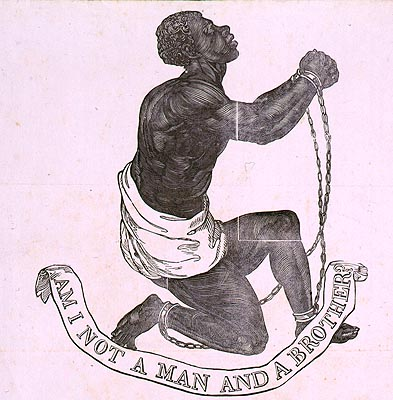
The American Anti-Slavery Society

“It takes great courage to open one's heart and mind to the tremendous injustice and suffering in our world.”  --Vincent A. Gallagher

Then and today.  I don’t know who this Vincent A. Gallagher is, but he’s got (had?) a point.  Here in America, everything is nice and peaceful and stable for the most part, so it’s easy to forget that little kids are learning how to kill people in Iraq and Syria, people are selling their kidneys and even their eyes out of desperation for money in parts of Africa, North Korea is shutting people off from the world and doing who knows what to them, and baby girls are being buried alive because they are girls.  Like Gallagher said, we’ve got to do something about it, we’ve got to help our fellow human beings.  Whether it’s joining that Model UN class or becoming president, or even starting a blog, we have the power to do something.

The American Anti-Slavery Society was an abolitionist group that formed when sixty brave people came together in Pennsylvania (a state with no slaves and few African  Americans, but a state that relied on cotton from the South for its economy) in December of 1833 and said, “this is wrong.”  William Lloyd Garrison, a fiery abolitionist from Massachusetts, rose as a leader of this group along with Theodore Weld, Arthur Tappan, and Lewis Tappan, asking “Are right and wrong convertible terms, dependent upon popular opinion?”

The Society grew with the support of 200,000 members, and their Board of Managers included six free black people.  They said that since “all men are created equal,” then why don’t they treat black people that way?  They also drew proof from the Bible to back their opinions in the Manifesto and argued that slavery was an unnatural injustice and was the cause of political tensions that would eventually split the country apart.  How could they call themselves Christians, they asked, while they were supporting such a system of cruelty?

The ultimate goal of the Society was to free all of the slaves from their involuntary servitude in the United States peacefully, yet immediately, by spreading awareness about the brutality of slavery and appealing to the compassion of common people.  They wanted to teach black people to feel good about themselves after centuries of people teaching them to feel ashamed about themselves.  

The American Anti-Slavery Society held meetings, sent petitions to congress, published newspapers such as The Liberator, and gave lectures.  It was not uncommon for pro-slavery mobs to invade during meetings and lectures, and attack speakers.  Congress got tired of receiving their petitions, and said that they would not consider any more petitions regarding slavery.  

The Society split into two branches when William Lloyd Garrison began teaching that women deserved rights as well.  The other branch focused on the freedom and equal treatment of African Americans only because they were unwilling to accept the idea that women could be equal in society.  Angelina and Sarah Grimke became the first female leaders at the organization.

Garrison and the abolitionists encouraged northerners to boycott voting or secede from slaveowning states to peacefully bring an end to slavery, or at least let the South know the extent of their hatred of the system.  When Lincoln ran for president, they helped him win.

The American Anti-Slavery Society dissolved in 1870.