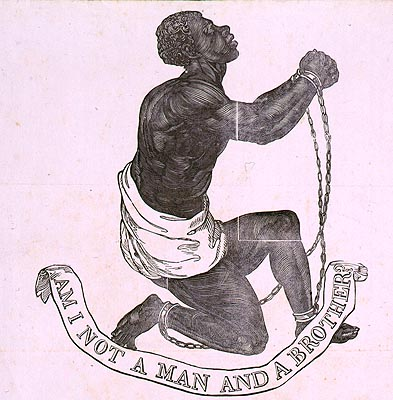
Monday, May 23, 2016

Ghosts

I am.
I am here.
Brothers, sisters, lovers, hear me, for I am here, born of the year of the dragon of the month of the lion, Leo, the day of the atomic bomb in Japan.  You can hear me roaring, louder than they.
Roaring who said it was okay to bury a child in the sand?
She was a girl, like me.
They thought to silence her with dirt and soiled tradition,
But they are the people who walk like zombies in the absence of the light,
Since I,
And she,
Come back to haunt them in the dark sweat
Dark regret
Of the night.

Heartbeat,
Fresh meat,
Listen to me speak.
I will not listen
To the frail glass-edged voices of the women on T.V.
Whose only lines are to ask when are you coming to bed, I bet
You wish true women
Were as correct.

There are some who will say all men are monsters
While some will say all women are meek.
Unintelligent.
Asleep.
But I say whether the coffins in our backyards
Are pink or blue,
Murder is murder and silence
Is suffocation, and further
On--is death.
But death, you say,

Is more than okay.

Monday, January 18, 2016

March On

There will be days
when the tire blows
and the sky feels wet
and the baby is covered in milk

There will be days
when the money's gone
and the glass is broken
and the snow is a grayish thing

Hope is the feather still fine and soft
Floating out of the house fire
Hope is the line etched into your palm,
There since the day you were born
Hope is the star still in the sky
when day comes

March on.

Monday, June 29, 2015

Still Here

     Between losing my laptop and an awkward sleep schedule, it's been hard to get to my blog for the past few weeks, but I will start researching again starting tomorrow, if Allah wills.
     I'd like to mention Tahera Ahmad.  I can't imagine being on a plane on my own, in tears because people were being racist and cursing me out.  And I find it scary that no one stood up for her.  Was it because they didn't want to become the target of the people's hatred or was she surrounded by islamophobics?
     And then in a church in Charleston, ten people were shot and nine of those people died.  The terrorist who shot them wanted to start a race war.  I read his website.  On it, he put forth an analogy: white people are to men as black people are to dogs.  It's the same nightmare again and again for African Americans.  And not just us-- any group that has been oppressed because of people's ignorance.  We need to stop labeling people.  Muslim or not, it is NOT OKAY to terrorize a person. Black or not, it is NOT OKAY to murder a person.
    Racist people's humanity can only be seen through the fragmented stained glass of ignorance.  We have no power to make them see clearer.  The best we can do is show them the truth and hope that they will really see it.

Saturday, May 2, 2015

The Real Violence

"But even in the shadows of physical violence, the real 

battlefield is the realm of ideas. The real violence is committed

in the writing of history, the records of the legal system, the

reporting of news, through the manipulation of social contracts,

 and the control of information. The real violence is committed

 by each one of us when we choose promotions over justice and

 popularity over truth."

--Bryant McGill

Palestinians walk past a pool of blood and blocks of cement after an Israeli shelling killed eight
children, seven women, and three men in 2006

Thursday, April 16, 2015

Our Story

Hush.  Listen.  Beyond the lights of the city and the fresh concrete on the roads lives a people.  Beyond the skyscrapers and the factories lives a story.  Their story is my story and my story is your story, our story is one story that is as old as the waves of the sea and the rocks of the earth.  One story.
The flames cast shadows on Chief Yellow’s face.  His skin hangs loosely from his cheekbones.  He whispers into the night, and his tongue is the tongue of his fathers, and his father’s, and his father’s, and on.  The children chase each other around the fire with feathers and furs falling from their shoulders.  
The shadows dance across the wall.  We choose harmony, we choose peace, we choose the wind in the trees, we choose life.  Listen to the shadow’s whispers.  They haunt me every night.
But nay, it was not to be.  It.  Was not.  To be.
Quit your rambling and listen, fool.  There are children shrieking, but how would you know?  You’ve muffled their voices with so many tunes and advertisements, you probably forgot they existed.  But now I’m making you listen, I’m making you watch.  The boy shrieks, and that one shriek is enough to shatter seven skies.  It was not to be.  Gunshots.  The earth is suddenly thrown off its axis.  The boy feels it.  They all do.
The man yells at Chief Yellow, but Chief Yellow doesn’t understand.  More gunshots.  His skin withers away and becomes earth.  I feel the sadness sifting through my fingers when I’m gardening.  
My story, your story, ours, listen.  Listen to the beat of the drum, quick as dancer’s feet.  Quick feet, chocolate skin, and eyes dark like an oak tree in the night.  Young, old, everyone dancing.  The mango is tangy in their mouth.  
It was not to be, no, it was not to be.  Children and elders lie side by side exhaling the last breaths of life.  I smell death.  You smell perfume.
At Winona Plantation, you will sense the presence of a word.  It can be found in the ink on a page, in the beams of a moon, in the heart and soul of men.  Have they found it yet, have we?
The boy walks with a limp.  He’s supposed to be twelve years old, but he can hardly reach the button of the machine and does not speak.  It’s not enough.  It’s never enough.   The boy stubs his toe, trips and falls into the machine.  I will never forget his bones as I scan the aisles with my eyes.
You do not speak the language of the dead, I know this.  You wipe your feet on the doormat that is stained with the blood of-- “Oh, say can you see?”-- No, Sam, I see, I see.
You are a happy man.  But are you?  They say ignorance is bliss, but they forget.  These are your brothers and sisters, but you forget.  
Beyond the city lights and barbed-wire fence lives a people, a story.  It is your story too, and mine, and ours.
And the story goes on.
And on.
And on.
Listen.

Monday, March 9, 2015

Letter to Eugenia

Dear Eugenia,
My best friend died in my arms yesterday.  I watched the light of life in his eyes flicker and extinguish.  My hands haven’t stopped shaking since.
As I walk over all this rubble and grime and blood, I can’t remember what it all was for.  I was twenty when I left you and joined the war.  Now I’m twenty-three.  Of course I was drafted, but I was excited for war.  But why?  I can’t seem to remember.
Why did they shoot him?  Prisoners of war are often used as leverage, they are usually kept alive.  But this man was killed like a dog as we rescued our soldiers and the receding Confederates took one final shot after executing many we could not rescue.  
He was a negro, you see.  I was suspicious at first, but now I see that he was a living being who deserved his right to life as much as the rest of us.
I have kitchen duty.  I scrub our dishes and clothes to the sound of screaming.  It is hard for the younger ones to keep moving.  That’s why most of us don’t go out to fight.  But I wanted to fight that day.  Why?  Every time I blink my eyes, I see the blood and the clay bursting from his chest.  I can’t sleep at night.
The Confederates won’t seem to give up.  They’re fighting for their country, their livelihood, their economy.  Even though we have the advantage of men, and supplies, they have the great advantage of will.  I wonder which will prove the strongest, in the end.  
It may be treasonous to say something like this, but sometimes I wonder if I’m fighting for the right side, or for the right reasons.  Word came in this morning that General Sherman has completed his March to the Sea.  He has torn a path of destruction from Atlanta to Savannah.  Even the churches were burnt down-- with people inside.  How will they survive?
As a man, I am expected to be brave and tough, and I am trying my hardest to keep that appearance.  I hope you do not think me a weak person, Eugenia, for I am trying so hard to be brave.
My best friend died in my arms yesterday.  He was killed like a dog.
And that’s why I go on.  Because I will never feel completely free until his mother and sisters and son are free as well.  That is why I fight.
I miss you.
Charles

Sunday, February 15, 2015

Bravery

What is bravery?

Dictionary.com defines bravery as the ability to do something that frightens you.

Some say bravery is not letting anything scary scare you.  Some say it means doing whatever you want because you can, and still others say it is doing what you have to do because you can.  Tobias Eaton, for one, touched all our hearts when he said that bravery isn't all that different from selflessness.  Some will even say that bravery is the equivalent of rebellion.

I'm starting to think that all these abstract terms-- happiness, love, freedom, bravery-- are like famous people.  They are intangible, so each individual must define them for themselves.

I think that before we can call ourselves brave, we must know ourselves and what we are striving for. Maybe you want to become a more confident person, or a greater soccer player.  Maybe you want to make the world a better place.  Bravery means to overcome all the obstacles that stand between you and what you're striving for and just do it.

Everyone that marched with MLK couldn't fight back because it was a nonviolent protest and that was how they decided to try to change things.  So by preserving their will even in the moments when it would be scary not to fight back, they were brave.  And it worked.

What do you strive for?


Wednesday, February 4, 2015

Slavery in Copper Sun by Sharon M. Draper

This was beyond her grasp, to torture a child like this.  What kind of people are they?  And then she saw it-- the dark figure of an alligator appeared in the water near Tidbit’s splashing feet.
--Copper Sun p160

Slavery-- the darkest moment in American history.  I did not quite understand the cruelty and brutality of American slavery until I read Copper Sun because the history textbooks leave so much out.  It is still beyond my understanding that any person can be so evil, so arrogant, as we see in the characters of Clay and  Mr. Derby in Copper Sun.  Mr. Derby shot a beautiful newborn baby because she was black.  When reading the novel, there was a moment when I realized that these horrors really did happen, and they happened to our people.  

It is unnatural for any human being to try to control another.  Once we realize that we are slaves of Allah, we are free.  The sense of despair at being trapped in a ridiculous system, which said that you are an animal, that you are less than an animal and your whole life is under the control of other people, left an indelible impression on me.  The concept of white supremacy was ingrained into society.  I mean, Mr. Derby and Clay and the white masters they represent actually believed that “‘Slavery just makes good sense... Anyway, our slaves are better off here than in some jungle eating bugs and slugs like savages... They need us.’”  That line made me very angry.  Back in her beautiful home, Amari was free to be herself, free to be brilliant.  The moment that that disgusting, evil man dragged her across the ship into his room, though, all of her dreams were destroyed.  She was a slave, and there was nothing she could do about it.  Her life was over.

Amari survived by learning English from Bill the red-headed sailor and Polly.  She kept her head down and obeyed Clay and his father, no matter what they told her to do.  But even Amari, with her strong spirit, wished for death a few times after a few nights with Clay.  She hardened herself from all emotions.  She distracted herself with her work, and sometimes she thought about her beautiful home and her family, her memories of happiness.  When she was with Teenie, Polly, and Tidbit, she was safe.  Finally, she found her freedom with survival techniques she had grown up learning in Africa, and with Polly and Tidbit by her side.  Slaves throughout history sang songs as they worked to keep them occupied and to pass secret messages that the master would not understand as a way to survive.

If I lived in West Africa back then and we saw some new people coming, I would be curious, just like Amari.  When my family and friends were killed, I would be too shocked to do anything.  I would continuously fight back against my oppressors.  If men came anywhere near me, I would punch them each in the face as hard as I could-- that is, until they broke my neck or my spirit, if they could break my spirit.  As a slave, I would have so much anger and bitterness and hatred inside that I would lash out at my fellow slaves.  And I would cry day after day after day.  I doubt I would survive such a nightmare.  I would be scared to try to escape, but my strong yearning for freedom might force me to.  And I hope I would be brave enough under such conditions to pray, even if they killed me for it.

To maintain our African culture, we can learn from oral tradition in our families or our communities because it takes a village to raise a child.  We should love each other as brothers and sisters just like everyone in Amari’s village helped each other out.  We should travel the world and visit Africa to learn about African culture.  How can we just stay here in Atlanta when there is so much more world out there, so many beautiful people?  Maintaining our African culture is important because Allah created us a certain way for a reason, and we should never be ashamed of that.  

How do we repair our broken souls?  I really don’t believe our souls are broken. If our souls were broken, black people would not have been fighting for the Union.  If our souls were broken, people would not be marching to the capitol for voting rights.  If our souls were broken, Ferguson, Missouri would be a quiet, normal town right now.  It wouldn’t even be in the news.  A sense of justice is not inherited, nor is cruelty.  We should unite behind justice, not colour.  

The question is, how do we eradicate racism?  We swallow up all this propaganda that America is all about liberty and equality and justice, but if that were true, Daniel Pantaleo would be indicted for strangling a man to death for no reason.  There wouldn’t be so many black people in jail right now.  There wouldn’t be so many black people on the street instead of college.  There wouldn’t be so many black women physically mutilating themselves just so they can have straight hair (Dr. Seuss’ The Sneetches).  We can’t breathe.

Remember David and Goliath?  David and the small army he was a part of were tasked with bringing down an army of giants, huge giants led by Goliath.  There was no way they could win.  Some of them ran away in fright.  The thing is, though, David and the small army had Allah on their side.  As Goliath and the giants were stomping on all the people and eating them, David got his little slingshot and took out Goliath’s eye.  No matter how big the injustice is, if we’ve got Allah on our side, we will be the victors in the Afterlife.  That’s who gives me hope, not Locke or Jefferson or Obama.  


Monday, January 26, 2015

The Man You Thought He Was: Lincoln

"While I was at the hotel to-day, an elderly gentleman called upon me to know whether I was really in favor of producing a perfect equality between the negroes and white people. [Great Laughter.] While I had not proposed to myself on this occasion to say much on that subject, yet as the question was asked me I thought I would occupy perhaps five minutes in saying something in regard to it. I will say then that I am not, nor ever have been, in favor of bringing about in any way the social and political equality of the white and black races, [applause]-that I am not nor ever have been in favor of making voters or jurors of negroes, nor of qualifying them to hold office, nor to intermarry with white people; and I will say in addition to this that there is a physical difference between the white and black races which I believe will forever forbid the two races living together on terms of social and political equality. And inasmuch as they cannot so live, while they do remain together there must be the position of superior and inferior, and I as much as any other man am in favor of having the superior position assigned to the white race. I say upon this occasion I do not perceive that because the white man is to have the superior position the negro should be denied every thing. I do not understand that because I do not want a negro woman for a slave I must necessarily want her for a wife. [Cheers and laughter.] My understanding is that I can just let her alone. I am now in my fiftieth year, and I certainly never have had a black woman for either a slave or a wife. So it seems to me quite possible for us to get along without making either slaves or wives of negroes. I will add to this that I have never seen, to my knowledge, a man, woman or child who was in favor of producing a perfect equality, social and political, between negroes and white men."

Monday, January 19, 2015

The American Anti-Slavery Society

“It takes great courage to open one's heart and mind to the tremendous injustice and suffering in our world.”  --Vincent A. Gallagher

Then and today.  I don’t know who this Vincent A. Gallagher is, but he’s got (had?) a point.  Here in America, everything is nice and peaceful and stable for the most part, so it’s easy to forget that little kids are learning how to kill people in Iraq and Syria, people are selling their kidneys and even their eyes out of desperation for money in parts of Africa, North Korea is shutting people off from the world and doing who knows what to them, and baby girls are being buried alive because they are girls.  Like Gallagher said, we’ve got to do something about it, we’ve got to help our fellow human beings.  Whether it’s joining that Model UN class or becoming president, or even starting a blog, we have the power to do something.

The American Anti-Slavery Society was an abolitionist group that formed when sixty brave people came together in Pennsylvania (a state with no slaves and few African  Americans, but a state that relied on cotton from the South for its economy) in December of 1833 and said, “this is wrong.”  William Lloyd Garrison, a fiery abolitionist from Massachusetts, rose as a leader of this group along with Theodore Weld, Arthur Tappan, and Lewis Tappan, asking “Are right and wrong convertible terms, dependent upon popular opinion?”

The Society grew with the support of 200,000 members, and their Board of Managers included six free black people.  They said that since “all men are created equal,” then why don’t they treat black people that way?  They also drew proof from the Bible to back their opinions in the Manifesto and argued that slavery was an unnatural injustice and was the cause of political tensions that would eventually split the country apart.  How could they call themselves Christians, they asked, while they were supporting such a system of cruelty?

The ultimate goal of the Society was to free all of the slaves from their involuntary servitude in the United States peacefully, yet immediately, by spreading awareness about the brutality of slavery and appealing to the compassion of common people.  They wanted to teach black people to feel good about themselves after centuries of people teaching them to feel ashamed about themselves.  

The American Anti-Slavery Society held meetings, sent petitions to congress, published newspapers such as The Liberator, and gave lectures.  It was not uncommon for pro-slavery mobs to invade during meetings and lectures, and attack speakers.  Congress got tired of receiving their petitions, and said that they would not consider any more petitions regarding slavery.  

The Society split into two branches when William Lloyd Garrison began teaching that women deserved rights as well.  The other branch focused on the freedom and equal treatment of African Americans only because they were unwilling to accept the idea that women could be equal in society.  Angelina and Sarah Grimke became the first female leaders at the organization.

Garrison and the abolitionists encouraged northerners to boycott voting or secede from slaveowning states to peacefully bring an end to slavery, or at least let the South know the extent of their hatred of the system.  When Lincoln ran for president, they helped him win.

The American Anti-Slavery Society dissolved in 1870.

Tuesday, January 13, 2015

A Note from the Author


So, apparently, Muslims are terrorists.  Black people are dumb and ugly.  Jews are corrupting the stock market.  White people are arrogant and immoral.  Indigenous people are inferior savages.  Christians are arrogant and hypocritical.  Women are emotional and dependent.

Did those statements make you angry?  If they didn't, there is something seriously wrong with your moral compass.  

I am a biracial (black and white) young woman with Cherokee and Blackfoot ancestors and a Christian maternal family.  


However, I don’t define myself with all of that baggage.  I define myself as a Muslim, someone who worships Allah, the one just God, and strives for all that is good.  


Just imagine for a moment, what if everyone were exactly the same?  What if everyone had the same religion, the same race?  And not just that-- the same gender and eye colour and nationality and hair colour and language and anything else that people use as an excuse for murder and oppression?  What if we were all exactly the same?


What if I were to tell you that we are exactly the same?  We are exactly the same because we are people.  I deserve to be treated well because I am a person.  You deserve to be treated well because you are a person.  We may have a thousand differences, but underneath all of that we are the same.  We are the same because Allah created us both from clay and a semen drop, and He gave us all a choice to do good or bad.  Your father could have been Hitler or MLK, but you have that choice.  

Once we realize that we are all people, once we realize that we are neither all on the same level compared to Allah, once we realize that racial labels mean nothing and how we act means everything, once we start treating each fellow person next to us as our brother or sister-- why, we could change the world.  

Thursday, January 8, 2015

Letter from William Penn to Native American Chiefs

My friends—There is one great God and power that hath made the world and all things therein, to whom you and I, and all people owe their being and well-being, and to whom you and I must one day give an account for all that we do in the world; this great God hath written his law in our hearts, by which we are taught and commanded to love and help, and do good to one another, and not to do harm and mischief one to another. Now this great God hath been pleased to make me concerned in your parts of the world, and the king of the country where I live hath given unto me a great province, but I desire to enjoy it with your love and consent, that we may always live together as neighbours and friends, else what would the great God say to us, who hath made us not to devour and destroy one another, but live soberly and kindly together in the world? Now I would have you well observe, that I am very sensible of the unkindness and injustice that hath been too much exercised towards you by the people of these parts of the world, who sought themselves, and to make great advantages by you, rather than be examples of justice and goodness unto you, which I hear hath been matter of trouble to you, and caused great grudgings and animosities, sometimes to the shedding of blood, which hath made the great God angry; but I am not such a man, as is well known in my own country; I have great love and regard towards you, and I desire to win and gain your love and friendship, by a kind, just, and peaceable life, and the people I send are of the same mind, and shall in all things behave themselves accordingly; and if in any thing any shall offend you or your people, you shall have a full and speedy satisfaction for the same, by an equal number of just men on both sides, that by no means you may have just occasion of being offended against them. I shall shortly come to you myself, at what time we may more largely and freely confer and discourse of these matters. In the mean time, I have sent my commissioners to treat with you about land, and a firm league of peace. Let me desire you to be kind to them and the people, and receive these presents and tokens which I have sent to you, as a testimony of my good will to you, and my resolution to live justly, peaceably, and friendly with you.
I am your loving friend,
WILLIAM PENN


Wednesday, January 7, 2015

The Stono Rebellion


On September 9, 1739, a group comprised mostly of new slaves from the Congo marched through South Carolina, killing anyone who tried to stop them, and shouting out a single word in unison: “Liberty!”   The Stono Rebellion, also known as Cato’s Conspiracy, was one of the very rare uprisings of African American slavery.

Before the rebellion, white slaveowners were growing concerned by the large number of African slaves in the area.  The slaves outnumbered white people in the South, especially close to  Charleston, the main trading port of South Carolina, so they passed a Security Act which required all white men to take guns to church every Sunday, a time when it would be easiest for an uprising to take place.  The Act would not take effect, however, for a few weeks.  That same year, a malaria epidemic had taken over Charleston, which caused much confusion in the colony.  

The slaves met on an early Sunday morning, when the white families they worked for would go to church.  They were mostly new slaves from the Congo region of Africa, led by a literate man named Jemmy, also known as Cato.  This group of around twenty met early in the morning by the Stono bank.  As they marched through the streets, they stole arms from a shop and killed the shopkeeper.  One white man’s life was spared because he had been kind to slaves.  Another white man was protected by his slaves, who eventually joined the protest.  In all, twenty-one white people were killed in the Stono Rebellion.

They were heading to St. Augustine, Florida-- the Spanish had promised freedom and land to anyone who came to serve in their army or otherwise.  As they marched on, shouting out “Liberty!” in unison and setting fire to houses, the number grew to sixty slaves.  Stono, South Carolina was shocked by the uprising.  So, when the slaves stopped their bloody march to rest, the militia, who had been warned by Lieutenant William Bull, who saw the rebellion at eleven o’clock, attacked.  Forty-four black people were killed.  

Slave masters in Stono were angry.  However, South Carolina penalized masters who punished their slaves brutally and created a Christian school for the slaves-- the slaves wouldn’t be able to learn themselves and read and write anymore, though.  Instead, they would depend solely on what they were taught.  In the Black Codes of 1740, South Carolina decided to cut off the slave trade.  Instead of bringing in more enslaved Africans which would endanger the white population, they would breed the slaves and enslave their children as well, an idea which had not been tried in previous history (usually slaves were debtors, prisoners of war, and criminals, and not based on race).  Slaves were no longer allowed to read and write, grow their own food, assemble into groups, or earn their own money.  They were deemed inferior and created for the white people of South Carolina to control.  And as it turned out, the slaves of Stono were completely deprived of the freedom they had fought so desperately to achieve.  

I strongly recommend this link for primary sources of the Stono Rebellion to make the information clearer:


Tuesday, December 23, 2014

Ode to History

My interest for you sparked
In the sixth grade
Your many colours and shades
Intrigued me
Whenever I looked closer, put my glasses on
You only became foggier

I followed you at the hunt across the Bering Strait
I followed you onto a ship in chains
I followed you through bloody snow, across the Delaware
I followed you into the White  House, where young men glared through plaster dust
I followed you from Georgia to Arkansas
And I cried too
I followed you into the forest at night, where dead black faces whispered beware
I followed you to Gettysburg, Pennsylvania
I followed you to the back of the bus, to the front of the bus
To jail
I followed you around the railroads, we saw many a man get killed
I followed you to Montgomery, and to Washington DC
I followed you to Pearl Harbor
I followed you into kindergarten that day-- we were singing the Japanese alphabet...
When the city exploded
I followed you into a hijacked plane headed to the capital
It crashed in Pennsylvania
I followed you up a tower, where we could smell burning flesh
I followed you through the smoke of Ferguson Missouri

Well, friend, let me tell you something
Now it's my turn to lead


Wednesday, December 17, 2014

The Salem Witch Trials


In a Massachusetts village, 200 innocent people were accused of witchcraft--twenty of which were executed and thirteen who died in jail.  The village was Salem, and the year was 1692.  Imagine a nine-year-old girl in bed shaking, muttering words no one understands, and throwing up.  Then her eleven-year-old cousin begins having the same symptoms.  A reverend named Parris watched his daughter and niece, and several other girls suffer.  When they accused old women in the village of casting evil spells against them and the doctor diagnosed witchcraft, the trials began.  The Salem Witch Trials were the result of community tensions and superstitions.


In the Qur’an, Allah told Adam and Eve that the tree was forbidden to them, and they could enjoy fruit from every tree and bush except for that one.  Then, they both reached for the fruit after being convinced by the Shaytan and they were both directly and individually punished for their sins.  In the Bible, however, Eve convinced Adam to obey Satan by getting fruit from the tree, even though God told them it was forbidden for them.  Puritans used this as confirmation that women were more likely to practice witchcraft than men.


A Native American slave of the reverend, Tituba, was one of the first to be accused by the girls.  When the girls started having such afflictions, Tituba and her husband helped their neighbor bake a cake made of rye meal and the girls’ urine, which was fed to the dog as a magical way of finding out who had hurt them.  When Parris, who may have been in a relationship with his slave, found out about the witch-cake, he was very angry.  Tituba confessed that she had made a deal with the devil, as well as several other people in the community after she was beaten for an accusation, and spent a year in prison.  


The next woman to be accused was Sarah Good, a homeless beggar who was considered a nuisance to the town.  Unlike Tituba, Good denied the accusations.  Instead, she in turn accused Sarah Osborne of witchcraft.  Her six-year-old daughter, Dorcas Good, was accused of witchcraft as well and she experienced psychological distress at an early age as a result of her time in prison.  Sarah Good was hung after losing another child in prison.


After Sarah Good, Sarah Osborne was tried for bewitching the girls.  She had married a wealthy man who entrusted her to pass down the estate to their young sons when they came of age. However, when Sarah married an Irish indentured servant, they tried to take the estate for themselves against the will of her dead husband's family. Despite her denial of the accusations, she was thrown into prison and died at the age of 49 without a trial.

These are just a few stories from the people who were wrongly jailed.  The Trials did not end until Mary Spencer Hull, the wealthy and prominent governor’s wife, was accused.  That was when they said things were getting too far.  No arrest warrant was issued for Hull.


While the “witches” were being tried, the girls had tremors and trances in their presence.  Some say they were acting; others say they were the victims of a disease caught from a strange fungus; others say they were the victims of witchcraft.  Still others say that the community pressured them into naming witches as vengeance against these people.  Or maybe the Puritans were just being hysterical like something out of Sula.  Perhaps we will never know.

For more information about Salem Witch Trial Conspiracies, watch videos from National Geographic.

Sunday, December 14, 2014

"A More Perfect Union" by President Obama

Remarks of Senator Barack Obama: 'A More Perfect Union'


Philadelphia, PA | March 18, 2008
As Prepared for Delivery


"We the people, in order to form a more perfect union."

Two hundred and twenty one years ago, in a hall that still stands across the street, a group of men gathered and, with these simple words, launched America's improbable experiment in democracy. Farmers and scholars; statesmen and patriots who had traveled across an ocean to escape tyranny and persecution finally made real their declaration of independence at a Philadelphia convention that lasted through the spring of 1787.

The document they produced was eventually signed but ultimately unfinished. It was stained by this nation's original sin of slavery, a question that divided the colonies and brought the convention to a stalemate until the founders chose to allow the slave trade to continue for at least twenty more years, and to leave any final resolution to future generations.

Of course, the answer to the slavery question was already embedded within our Constitution - a Constitution that had at its very core the ideal of equal citizenship under the law; a Constitution that promised its people liberty, and justice, and a union that could be and should be perfected over time.

And yet words on a parchment would not be enough to deliver slaves from bondage, or provide men and women of every color and creed their full rights and obligations as citizens of the United States. What would be needed were Americans in successive generations who were willing to do their part - through protests and struggle, on the streets and in the courts, through a civil war and civil disobedience and always at great risk - to narrow that gap between the promise of our ideals and the reality of their time.

This was one of the tasks we set forth at the beginning of this campaign - to continue the long march of those who came before us, a march for a more just, more equal, more free, more caring and more prosperous America. I chose to run for the presidency at this moment in history because I believe deeply that we cannot solve the challenges of our time unless we solve them together - unless we perfect our union by understanding that we may have different stories, but we hold common hopes; that we may not look the same and we may not have come from the same place, but we all want to move in the same direction - towards a better future for our children and our grandchildren.

This belief comes from my unyielding faith in the decency and generosity of the American people. But it also comes from my own American story.

I am the son of a black man from Kenya and a white woman from Kansas. I was raised with the help of a white grandfather who survived a Depression to serve in Patton's Army during World War II and a white grandmother who worked on a bomber assembly line at Fort Leavenworth while he was overseas. I've gone to some of the best schools in America and lived in one of the world's poorest nations. I am married to a black American who carries within her the blood of slaves and slaveowners - an inheritance we pass on to our two precious daughters. I have brothers, sisters, nieces, nephews, uncles and cousins, of every race and every hue, scattered across three continents, and for as long as I live, I will never forget that in no other country on Earth is my story even possible.

It's a story that hasn't made me the most conventional candidate. But it is a story that has seared into my genetic makeup the idea that this nation is more than the sum of its parts - that out of many, we are truly one.

Throughout the first year of this campaign, against all predictions to the contrary, we saw how hungry the American people were for this message of unity. Despite the temptation to view my candidacy through a purely racial lens, we won commanding victories in states with some of the whitest populations in the country. In South Carolina, where the Confederate Flag still flies, we built a powerful coalition of African Americans and white Americans.

This is not to say that race has not been an issue in the campaign. At various stages in the campaign, some commentators have deemed me either "too black" or "not black enough." We saw racial tensions bubble to the surface during the week before the South Carolina primary. The press has scoured every exit poll for the latest evidence of racial polarization, not just in terms of white and black, but black and brown as well.

But race is an issue that I believe this nation cannot afford to ignore right now. We would be making the same mistake that Reverend Wright made in his offending sermons about America - to simplify and stereotype and amplify the negative to the point that it distorts reality.

The fact is that the comments that have been made and the issues that have surfaced over the last few weeks reflect the complexities of race in this country that we've never really worked through - a part of our union that we have yet to perfect. And if we walk away now, if we simply retreat into our respective corners, we will never be able to come together and solve challenges like health care, or education, or the need to find good jobs for every American.

Understanding this reality requires a reminder of how we arrived at this point. As William Faulkner once wrote, "The past isn't dead and buried. In fact, it isn't even past." We do not need to recite here the history of racial injustice in this country. But we do need to remind ourselves that so many of the disparities that exist in the African-American community today can be directly traced to inequalities passed on from an earlier generation that suffered under the brutal legacy of slavery and Jim Crow.

Segregated schools were, and are, inferior schools; we still haven't fixed them, fifty years after Brown v. Board of Education, and the inferior education they provided, then and now, helps explain the pervasive achievement gap between today's black and white students.

Legalized discrimination - where blacks were prevented, often through violence, from owning property, or loans were not granted to African-American business owners, or black homeowners could not access FHA mortgages, or blacks were excluded from unions, or the police force, or fire departments - meant that black families could not amass any meaningful wealth to bequeath to future generations. That history helps explain the wealth and income gap between black and white, and the concentrated pockets of poverty that persists in so many of today's urban and rural communities.

A lack of economic opportunity among black men, and the shame and frustration that came from not being able to provide for one's family, contributed to the erosion of black families - a problem that welfare policies for many years may have worsened. And the lack of basic services in so many urban black neighborhoods - parks for kids to play in, police walking the beat, regular garbage pick-up and building code enforcement - all helped create a cycle of violence, blight and neglect that continue to haunt us.

This is the reality in which Reverend Wright and other African-Americans of his generation grew up. They came of age in the late fifties and early sixties, a time when segregation was still the law of the land and opportunity was systematically constricted. What's remarkable is not how many failed in the face of discrimination, but rather how many men and women overcame the odds; how many were able to make a way out of no way for those like me who would come after them.

But for all those who scratched and clawed their way to get a piece of the American Dream, there were many who didn't make it - those who were ultimately defeated, in one way or another, by discrimination. That legacy of defeat was passed on to future generations - those young men and increasingly young women who we see standing on street corners or languishing in our prisons, without hope or prospects for the future. Even for those blacks who did make it, questions of race, and racism, continue to define their worldview in fundamental ways. For the men and women of Reverend Wright's generation, the memories of humiliation and doubt and fear have not gone away; nor has the anger and the bitterness of those years. That anger may not get expressed in public, in front of white co-workers or white friends. But it does find voice in the barbershop or around the kitchen table. At times, that anger is exploited by politicians, to gin up votes along racial lines, or to make up for a politician's own failings.

And occasionally it finds voice in the church on Sunday morning, in the pulpit and in the pews. The fact that so many people are surprised to hear that anger in some of Reverend Wright's sermons simply reminds us of the old truism that the most segregated hour in American life occurs on Sunday morning. That anger is not always productive; indeed, all too often it distracts attention from solving real problems; it keeps us from squarely facing our own complicity in our condition, and prevents the African-American community from forging the alliances it needs to bring about real change. But the anger is real; it is powerful; and to simply wish it away, to condemn it without understanding its roots, only serves to widen the chasm of misunderstanding that exists between the races.

In fact, a similar anger exists within segments of the white community. Most working- and middle-class white Americans don't feel that they have been particularly privileged by their race. Their experience is the immigrant experience - as far as they're concerned, no one's handed them anything, they've built it from scratch. They've worked hard all their lives, many times only to see their jobs shipped overseas or their pension dumped after a lifetime of labor. They are anxious about their futures, and feel their dreams slipping away; in an era of stagnant wages and global competition, opportunity comes to be seen as a zero sum game, in which your dreams come at my expense. So when they are told to bus their children to a school across town; when they hear that an African American is getting an advantage in landing a good job or a spot in a good college because of an injustice that they themselves never committed; when they're told that their fears about crime in urban neighborhoods are somehow prejudiced, resentment builds over time.

Like the anger within the black community, these resentments aren't always expressed in polite company. But they have helped shape the political landscape for at least a generation. Anger over welfare and affirmative action helped forge the Reagan Coalition. Politicians routinely exploited fears of crime for their own electoral ends. Talk show hosts and conservative commentators built entire careers unmasking bogus claims of racism while dismissing legitimate discussions of racial injustice and inequality as mere political correctness or reverse racism.

Just as black anger often proved counterproductive, so have these white resentments distracted attention from the real culprits of the middle class squeeze - a corporate culture rife with inside dealing, questionable accounting practices, and short-term greed; a Washington dominated by lobbyists and special interests; economic policies that favor the few over the many. And yet, to wish away the resentments of white Americans, to label them as misguided or even racist, without recognizing they are grounded in legitimate concerns - this too widens the racial divide, and blocks the path to understanding.

This is where we are right now. It's a racial stalemate we've been stuck in for years. Contrary to the claims of some of my critics, black and white, I have never been so naïve as to believe that we can get beyond our racial divisions in a single election cycle, or with a single candidacy - particularly a candidacy as imperfect as my own.

But I have asserted a firm conviction - a conviction rooted in my faith in God and my faith in the American people - that working together we can move beyond some of our old racial wounds, and that in fact we have no choice if we are to continue on the path of a more perfect union.

For the African-American community, that path means embracing the burdens of our past without becoming victims of our past. It means continuing to insist on a full measure of justice in every aspect of American life. But it also means binding our particular grievances - for better health care, and better schools, and better jobs - to the larger aspirations of all Americans -- the white woman struggling to break the glass ceiling, the white man whose been laid off, the immigrant trying to feed his family. And it means taking full responsibility for own lives - by demanding more from our fathers, and spending more time with our children, and reading to them, and teaching them that while they may face challenges and discrimination in their own lives, they must never succumb to despair or cynicism; they must always believe that they can write their own destiny.

Ironically, this quintessentially American - and yes, conservative - notion of self-help found frequent expression in Reverend Wright's sermons. But what my former pastor too often failed to understand is that embarking on a program of self-help also requires a belief that society can change.

The profound mistake of Reverend Wright's sermons is not that he spoke about racism in our society. It's that he spoke as if our society was static; as if no progress has been made; as if this country - a country that has made it possible for one of his own members to run for the highest office in the land and build a coalition of white and black; Latino and Asian, rich and poor, young and old -- is still irrevocably bound to a tragic past. But what we know -- what we have seen - is that America can change. That is the true genius of this nation. What we have already achieved gives us hope - the audacity to hope - for what we can and must achieve tomorrow.

In the white community, the path to a more perfect union means acknowledging that what ails the African-American community does not just exist in the minds of black people; that the legacy of discrimination - and current incidents of discrimination, while less overt than in the past - are real and must be addressed. Not just with words, but with deeds - by investing in our schools and our communities; by enforcing our civil rights laws and ensuring fairness in our criminal justice system; by providing this generation with ladders of opportunity that were unavailable for previous generations. It requires all Americans to realize that your dreams do not have to come at the expense of my dreams; that investing in the health, welfare, and education of black and brown and white children will ultimately help all of America prosper.

In the end, then, what is called for is nothing more, and nothing less, than what all the world's great religions demand - that we do unto others as we would have them do unto us. Let us be our brother's keeper, Scripture tells us. Let us be our sister's keeper. Let us find that common stake we all have in one another, and let our politics reflect that spirit as well.

For we have a choice in this country. We can accept a politics that breeds division, and conflict, and cynicism. We can tackle race only as spectacle - as we did in the OJ trial - or in the wake of tragedy, as we did in the aftermath of Katrina - or as fodder for the nightly news. We can play Reverend Wright's sermons on every channel, every day and talk about them from now until the election, and make the only question in this campaign whether or not the American people think that I somehow believe or sympathize with his most offensive words. We can pounce on some gaffe by a Hillary supporter as evidence that she's playing the race card, or we can speculate on whether white men will all flock to John McCain in the general election regardless of his policies.

We can do that.

But if we do, I can tell you that in the next election, we'll be talking about some other distraction. And then another one. And then another one. And nothing will change.

That is one option. Or, at this moment, in this election, we can come together and say, "Not this time." This time we want to talk about the crumbling schools that are stealing the future of black children and white children and Asian children and Hispanic children and Native American children. This time we want to reject the cynicism that tells us that these kids can't learn; that those kids who don't look like us are somebody else's problem. The children of America are not those kids, they are our kids, and we will not let them fall behind in a 21st century economy. Not this time.

This time we want to talk about how the lines in the Emergency Room are filled with whites and blacks and Hispanics who do not have health care; who don't have the power on their own to overcome the special interests in Washington, but who can take them on if we do it together.

This time we want to talk about the shuttered mills that once provided a decent life for men and women of every race, and the homes for sale that once belonged to Americans from every religion, every region, every walk of life. This time we want to talk about the fact that the real problem is not that someone who doesn't look like you might take your job; it's that the corporation you work for will ship it overseas for nothing more than a profit.

This time we want to talk about the men and women of every color and creed who serve together, and fight together, and bleed together under the same proud flag. We want to talk about how to bring them home from a war that never should've been authorized and never should've been waged, and we want to talk about how we'll show our patriotism by caring for them, and their families, and giving them the benefits they have earned.

I would not be running for President if I didn't believe with all my heart that this is what the vast majority of Americans want for this country. This union may never be perfect, but generation after generation has shown that it can always be perfected. And today, whenever I find myself feeling doubtful or cynical about this possibility, what gives me the most hope is the next generation - the young people whose attitudes and beliefs and openness to change have already made history in this election.

There is one story in particularly that I'd like to leave you with today - a story I told when I had the great honor of speaking on Dr. King's birthday at his home church, Ebenezer Baptist, in Atlanta.

There is a young, twenty-three year old white woman named Ashley Baia who organized for our campaign in Florence, South Carolina. She had been working to organize a mostly African-American community since the beginning of this campaign, and one day she was at a roundtable discussion where everyone went around telling their story and why they were there.

And Ashley said that when she was nine years old, her mother got cancer. And because she had to miss days of work, she was let go and lost her health care. They had to file for bankruptcy, and that's when Ashley decided that she had to do something to help her mom.

She knew that food was one of their most expensive costs, and so Ashley convinced her mother that what she really liked and really wanted to eat more than anything else was mustard and relish sandwiches. Because that was the cheapest way to eat.

She did this for a year until her mom got better, and she told everyone at the roundtable that the reason she joined our campaign was so that she could help the millions of other children in the country who want and need to help their parents too.

Now Ashley might have made a different choice. Perhaps somebody told her along the way that the source of her mother's problems were blacks who were on welfare and too lazy to work, or Hispanics who were coming into the country illegally. But she didn't. She sought out allies in her fight against injustice.

Anyway, Ashley finishes her story and then goes around the room and asks everyone else why they're supporting the campaign. They all have different stories and reasons. Many bring up a specific issue. And finally they come to this elderly black man who's been sitting there quietly the entire time. And Ashley asks him why he's there. And he does not bring up a specific issue. He does not say health care or the economy. He does not say education or the war. He does not say that he was there because of Barack Obama. He simply says to everyone in the room, "I am here because of Ashley."

"I'm here because of Ashley." By itself, that single moment of recognition between that young white girl and that old black man is not enough. It is not enough to give health care to the sick, or jobs to the jobless, or education to our children.

But it is where we start. It is where our union grows stronger. And as so many generations have come to realize over the course of the two-hundred and twenty one years since a band of patriots signed that document in Philadelphia, that is where the perfection begins.